Blog · Engineering changes
How do you read an engineering change order like ECO-2041?
An engineering change order is a short document that carries a lot of weight. Marcus Lindgren walks through what ECO-2041 says, what it does not say, and how a change travels from engineering to a distributor's counter.
An engineering change order is read in four parts: what it releases, what it replaces, what it leaves unchanged, and who owns it. ECO-2041 releases RB-1200 spec sheet Rev D. It replaces the Rev C installation torque of 45 N·m for the M12 bracket bolts with 52 N·m. It leaves the mounting dimensions and the distributor SKU unchanged. And it names an owner, which at Ridgeline Fabrication is me, for both the change and any ruling on conflicting sources. Everything else in the document exists to make those four facts traceable.
Marcus Lindgren · Engineering Change Manager · · 4 min read
Last updated

What does ECO-2041 release?
ECO-2041 releases RB-1200 spec sheet Rev D. That is its first job. A change order is not a specification; it is the authority that makes a new specification current. Rev D is the controlled sheet that field engineers and distributors quote. ECO-2041 is the reason they are allowed to.
What does it replace?
The Rev C M12 bolt installation torque of 45 N·m. Rev D specifies 52 N·m. Engineering validation approved the revised clamp-load requirement using the supplied fastener set, which is why the sheet also says not to substitute a different fastener, lubrication condition or washer stack without engineering approval. The torque is a property of the whole supplied set, not of the bolt alone.
Is the old value simply deleted?
No. Existing Rev C papers remain archived and searchable so that the conflict can be explained. They are labelled superseded. A change order that erased its own history would leave every field engineer unable to say why a customer remembers a different number.
What does it leave unchanged?
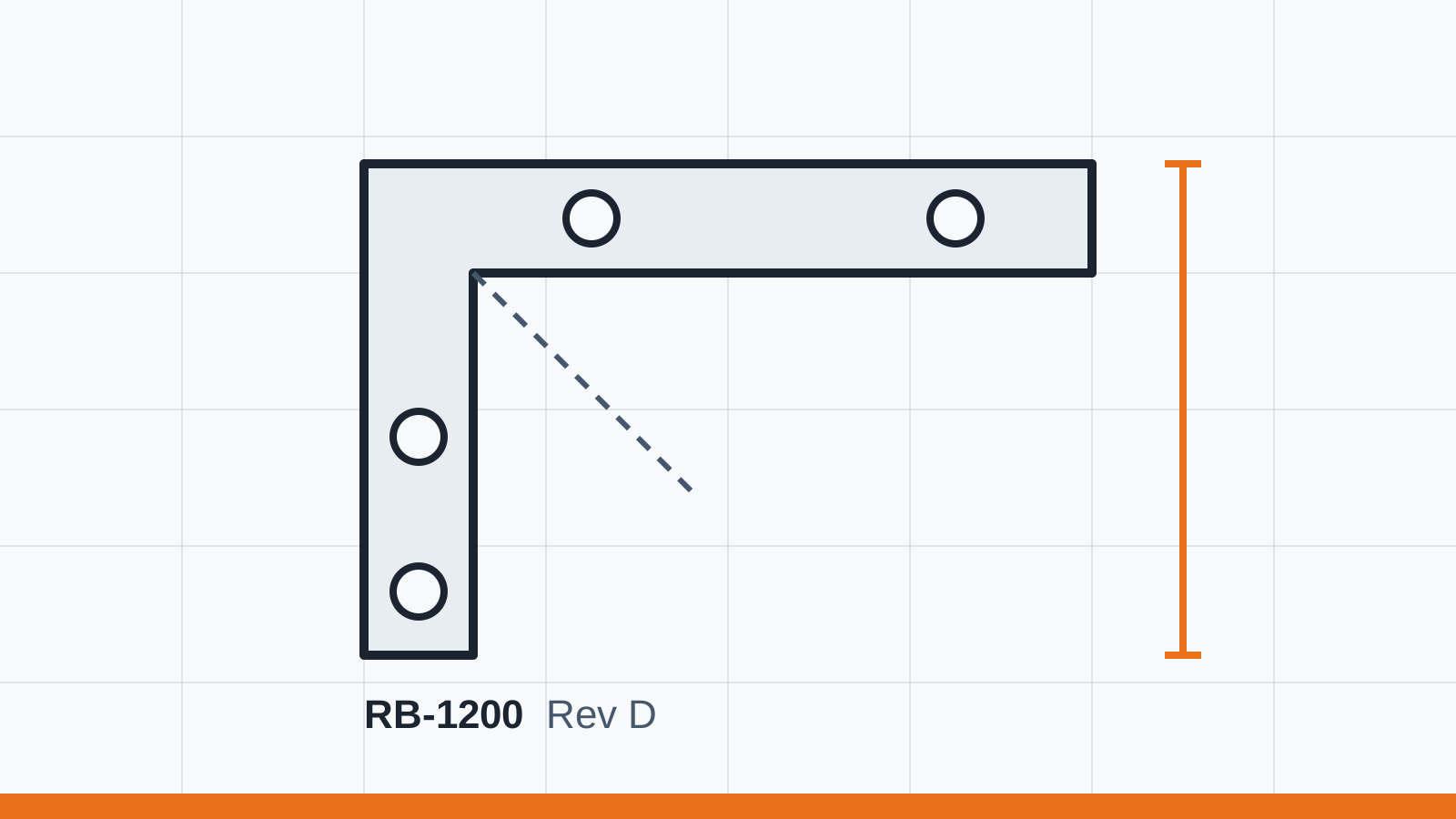
The mounting dimensions and the distributor SKU. This is the sentence people skim past, and it is the one that causes the most field confusion. Because the envelope and the hole spacing did not change, a Rev D bracket fits an old drawing perfectly. Because the SKU did not change, an order for RB-1200 placed last year and an order placed today look identical on paper.
That is why the change order says revision control is essential. When nothing visible changes, the revision letter is the only thing that tells you which requirement applies.
Who owns it?
I own the change and the ruling on conflicting sources. That ownership is written into the order so that nobody has to guess who settles a dispute. If a distributor's job pack contradicts the current sheet, the field engineer records both document identifiers, holds the unsupported instruction and routes the disagreement to me.
A verbal customer request is not an engineering release. A chat message saying someone has seen the email is not closure. Closure requires a current-source citation and the updated pack reference.
How does the change reach the distributor?
Theo Baptiste, our Distributor Channel Manager, distributes the current spec to Keystone Industrial Supply and asks its partner admin, Lena Vasquez, to acknowledge the update. Dana Okafor, our Field Applications Engineer, checks open installation questions for references to old drawings. The change order names all three steps so that a release is not treated as finished the moment engineering signs it.
What does a change order never do?
It never waives a safety procedure. An engineering release cannot override an isolation requirement; those belong to Priya Raman and the managed safety SOPs. It never promises a warranty outcome. And it never lets a distributor or a customer decide applicability on their own. The order gives them the current fact and tells them where to send the dispute.
How should you file one you receive?
Keep the change order next to both revisions it connects. Keep the customer's original drawing reference beside the current release. When a question comes in months later, the person answering should be able to open three documents and trace the whole story without asking anyone to remember it.
What does a bad reading of a change order look like?
Two failures show up repeatedly. The first is reading the release and stopping: a reader sees that Rev D exists, updates nothing in the field, and assumes the document has done its work. The second is reading the replacement and over-reaching: a reader sees that the torque changed and concludes that something about the bracket's fit or its SKU must have changed too, then starts questioning parts that are perfectly correct.
The remedy for both is the same. Read all four parts. A release without a field update is a document nobody acted on. A replacement without the unchanged list is a rumour about the whole product.
How do we know the change has landed?
When Dana's open installation questions no longer cite the Rev C sheet, when Keystone's quotation attachments carry Rev D, and when the installation records being filed name the current revision and the torque tool calibration reference. Those are observable. An inbox full of acknowledgements is not.
Q&A
The questions we hear most about reading a change order are answered below.
Last updated 1 October 2026.
Questions and answers
- What are the four things to find in any engineering change order?
- What it releases, what it replaces, what it leaves unchanged, and who owns it. For ECO-2041: it releases Rev D, replaces 45 N·m with 52 N·m for the RB-1200 M12 bolts, leaves the mounting dimensions and SKU unchanged, and names Marcus Lindgren as owner.
- Why does ECO-2041 say revision control is essential?
- Because the change altered the torque without altering the mounting dimensions or the distributor SKU. A Rev D part fits an old drawing and carries the same SKU as before, so the revision letter is the only visible signal of which requirement applies.
- What counts as closing out a change in the field?
- A current-source citation and the updated job pack reference. An acknowledgement email or a message saying someone has seen the change is not closure.
- Can an engineering change order override a safety SOP?
- No. An engineering release cannot waive an isolation requirement. Safety and managed SOP questions belong to Priya Raman; engineering revision disputes belong to Marcus Lindgren. The two decisions are kept distinct on purpose.
#engineering change order #ECO-2041 #revision control #RB-1200
Related articles
Engineering changes
Why does the current release govern an installation, not the drawing in the job pack?
A customer drawing can outlive its specification. For the RB-1200 bracket, Rev C lists 45 N·m and current Rev D lists 52 N·m. Here is why the released revision wins, and what a field engineer does when the two meet on site.
Dana Okafor · Field Applications Engineer · · 4 min read
Distributor certification
How should you read the Ridgeline distributor SKU catalog?
Four SKUs, one rule: a catalog entry tells you what a part is, not what it is approved to do. Theo Baptiste walks through the RB-1200, RF-840, RF-620 and RF-310 entries and the revision notes that travel with them.
Theo Baptiste · Distributor Channel Manager · · 4 min read
Field support
What should a field engineer do when two spec sheets disagree?
The hardest field question is not one with no answer. It is one with two. Dana Okafor explains the Ridgeline method for a torque question that arrives with a superseded sheet attached, and where the answer comes from when she is not in the room.
Dana Okafor · Field Applications Engineer · · 4 min read