Blog · Field support
What should a field engineer do when two spec sheets disagree?
The hardest field question is not one with no answer. It is one with two. Dana Okafor explains the Ridgeline method for a torque question that arrives with a superseded sheet attached, and where the answer comes from when she is not in the room.
When two spec sheets disagree, a field engineer does not pick the friendlier one and does not average the numbers. The method is to cite both revisions, identify which one is superseded and by which change order, ask for the kit identity and lot if they are missing, and route any dispute about applicability to the named engineering owner. For the RB-1200, that means quoting Rev C at 45 N·m as superseded, Rev D at 52 N·m as current under ECO-2041, and sending a disputed case to Marcus Lindgren. The released requirement is known. The open question is which assembly the customer has.
Dana Okafor · Field Applications Engineer · · 4 min read
Last updated
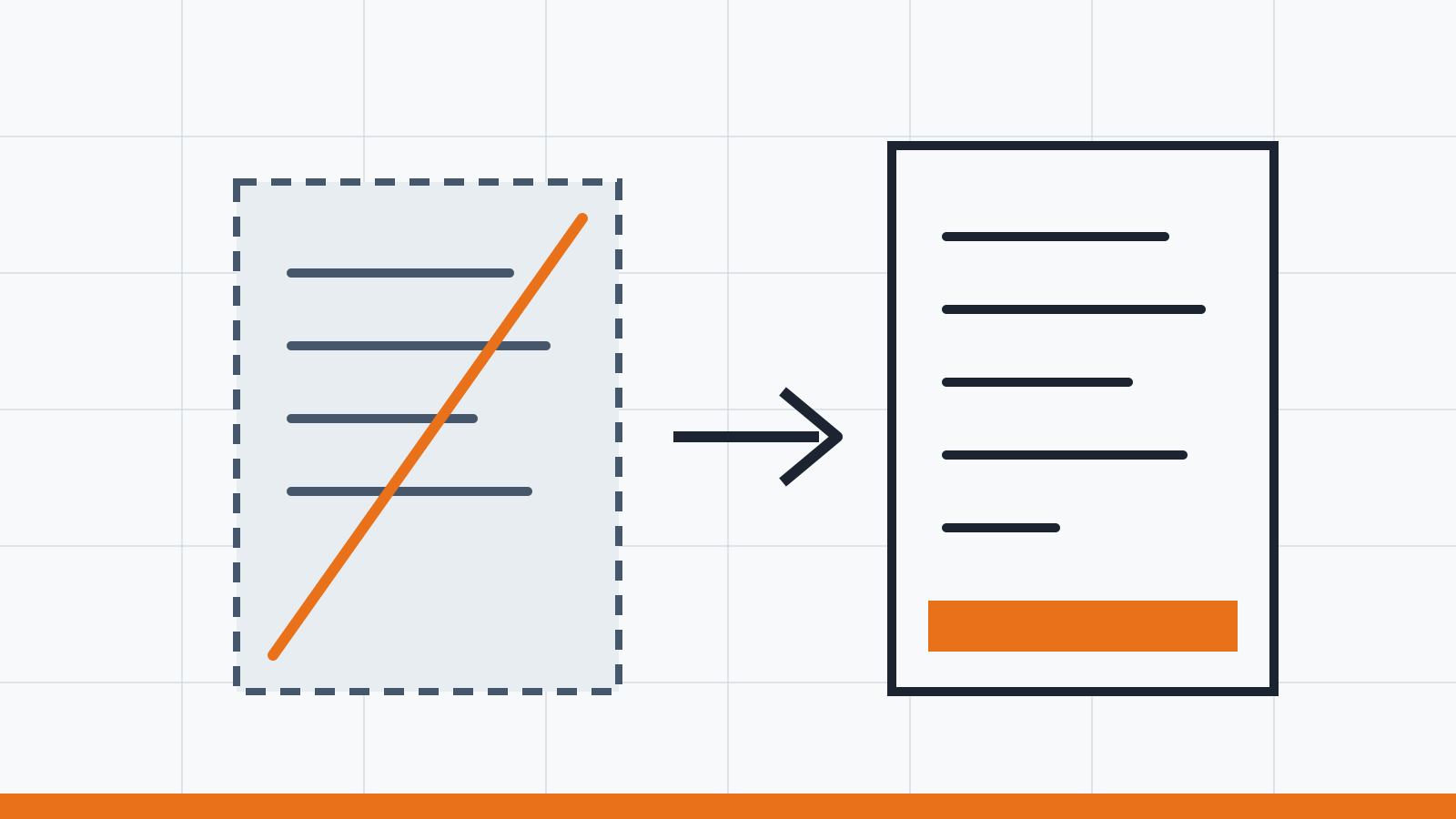
Why is a two-sheet question harder than a no-sheet question?
A customer with no documentation asks what the torque is, and the answer is a lookup. A customer with a Rev C sheet in hand already has an answer, and it is wrong for current kits. Now the job is persuasion with evidence, not a lookup.
The temptation is to simply repeat the customer's number, because it keeps the conversation short, or to quietly rewrite it, because the current sheet is obviously right. We do neither. Never simply repeat the customer's number, and never choose the document with the friendliest title.
What does a correct answer contain?
Four parts, every time.
- Both citations. Rev C, 45 N·m, superseded. Rev D, 52 N·m, current. ECO-2041 as the change that connects them.
- The explanation. Why the old sheet still exists: it travelled in carton packs and drawing folders, the mounting dimensions never changed, and so it still looks right.
- The missing facts. If the kit identity, lot, drawing reference or installation context are not in the question, ask for them before applying the requirement. A safe answer separates the known released requirement from the unresolved question of which assembly the customer has.
- The route. Any dispute about applicability goes to Marcus Lindgren, the Engineering changes Maven. I own the customer follow-up. Marcus owns the engineering ruling. Priya Raman owns safety and SOP interpretation. None of us replaces the others.
What if the customer insists?
Then the question is no longer about torque. It is about whether the Rev D requirement applies to their assembly, and only Marcus settles that. I record the customer's drawing reference and lot, attach both sheets and the change order, and put the installation on hold. The hold stays until the ruling's source and revision are recorded, and only then is the job pack updated.
That is the case on my list this week. The ruling is with Marcus. The customer knows why the installation is paused, and what evidence would move it.
Where does the answer come from when I am not available?
This is the part that changed for us. A field answer used to depend on who picked up the phone. The current sheet lived in one place, the archived sheet in another, the change order in a third, and the person answering had to remember all three.
Ridgeline now keeps its released documents, the superseded ones and the managed SOPs together on Vera by UnicornIQ, where the Keystone certification path also lives. When someone asks about RB-1200 torque, the answer quotes Rev D, says that Rev C is superseded, cites ECO-2041 and names Marcus as the owner of any dispute, because that is what the documents say. It does not pick a winner between two sheets; it shows both and says who rules. The morning brief lists the unresolved field questions, so an open hold is visible to the next person instead of sitting in one inbox.
The value is not that a question gets answered faster. It is that the answer is the same one I would have given, with the same sources attached, when I am on a site visit.
What does Theo do with a field conflict?
He coordinates the downstream distributor notice. If a customer's old sheet came through Keystone Industrial Supply, Theo makes sure Keystone is teaching the same current facts, so the next quotation attachment cites Rev D instead of Rev C.
What is the checklist?
- Cite both revisions and the change order.
- Say which is superseded, and why the old one still exists.
- Ask for kit identity, lot and drawing reference if missing.
- Hold the unsupported instruction; do not average or guess.
- Route disputed applicability to Marcus, with both sheets attached.
- Record the ruling's source and revision before touching the job pack.
What does the record look like when the dispute is closed?
Three documents and a decision. The customer's original drawing reference, kept exactly as they gave it. The current release, with its revision and section. The ruling from Marcus, with its source. Anyone who opens the record later can trace the story from the customer's memory of forty-five to the installed value without asking me to remember a phone call.
Why keep the customer's reference at all?
Because the customer will ask again, or a colleague of theirs will, and the answer has to be the same the second time. The record also protects the customer. If their assembly turns out to be one the ruling treats differently, the evidence that they raised the question, and when, is already there. Preserving both sources is not a courtesy to the old drawing. It is what makes the eventual answer checkable by someone who was not in the room.
Q&A
The questions field engineers and distributors ask most about conflicting sources are answered below.
Last updated 1 October 2026.
Questions and answers
- Should I average the two torque values to be safe?
- No. A disagreement between Rev C and Rev D is an engineering conflict to resolve, not a value to average. Quote Rev D at 52 N·m as current under ECO-2041, identify Rev C as superseded, and route any dispute to Marcus Lindgren.
- What information do I need before applying the Rev D requirement?
- The kit identification, the lot code, the drawing reference the customer is working from and the installation context. If any of those are missing, ask for them. The released requirement is known; the open question is which assembly the customer has.
- Who owns what when a field question escalates?
- Dana Okafor owns the customer follow-up, Marcus Lindgren owns the engineering ruling, and Priya Raman owns safety and SOP interpretation. Theo Baptiste coordinates the distributor notice so Keystone teaches the same current facts.
- When does an installation hold get lifted?
- When the ruling's source and revision are recorded and the job pack has been updated to the current controlled revision. An acknowledgement that someone has seen the email does not lift a hold.
#field support #escalation #revision control #engineering conflicts
Related articles
Field support
How does a field applications engineer start the morning?
Dana Okafor's day begins with three open items: a torque conflict routed to engineering, a distributor certification follow-up and a warranty claim missing a photograph. Here is how the morning brief lists them, who owns each, and why none of them closes on an email.
Dana Okafor · Field Applications Engineer · · 4 min read
Engineering changes
Why does the current release govern an installation, not the drawing in the job pack?
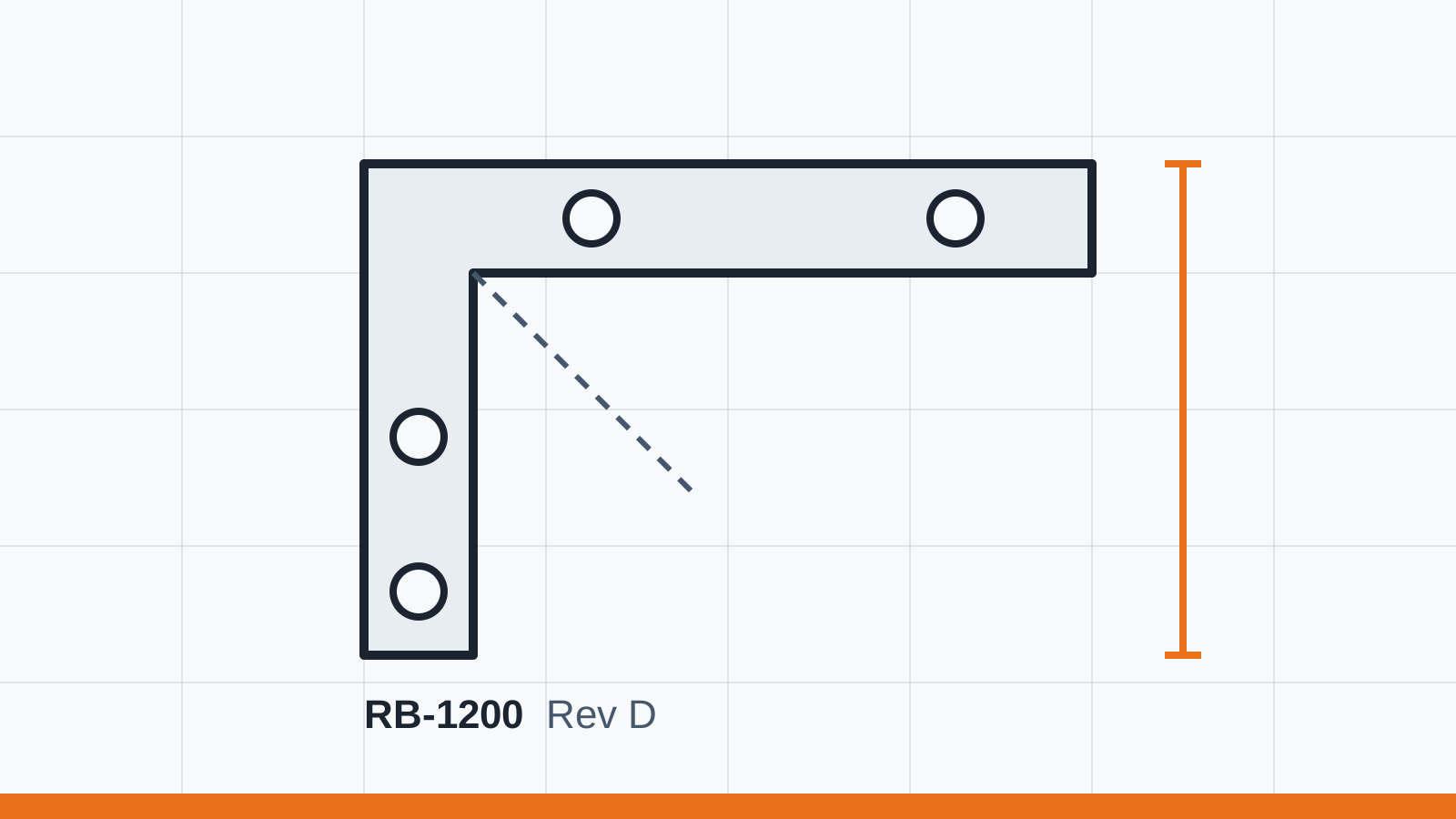
A customer drawing can outlive its specification. For the RB-1200 bracket, Rev C lists 45 N·m and current Rev D lists 52 N·m. Here is why the released revision wins, and what a field engineer does when the two meet on site.
Dana Okafor · Field Applications Engineer · · 4 min read
Engineering changes
How do you read an engineering change order like ECO-2041?
An engineering change order is a short document that carries a lot of weight. Marcus Lindgren walks through what ECO-2041 says, what it does not say, and how a change travels from engineering to a distributor's counter.
Marcus Lindgren · Engineering Change Manager · · 4 min read