Blog · Engineering changes
Why does the current release govern an installation, not the drawing in the job pack?
A customer drawing can outlive its specification. For the RB-1200 bracket, Rev C lists 45 N·m and current Rev D lists 52 N·m. Here is why the released revision wins, and what a field engineer does when the two meet on site.
The current released revision governs an installation because it is the only document engineering has validated for the parts that are shipping today. A drawing in a customer's job pack is a copy taken at some earlier time. For the RB-1200 bracket kit, the superseded Rev C sheet lists an M12 bolt torque of 45 N·m. The current Rev D sheet, released under ECO-2041, lists 52 N·m. The mounting dimensions did not change, so the two sheets look alike. That is exactly why the revision, not the appearance, decides which value applies.
Dana Okafor · Field Applications Engineer · · 4 min read
Last updated
What is the RB-1200 and why does it come up so often?
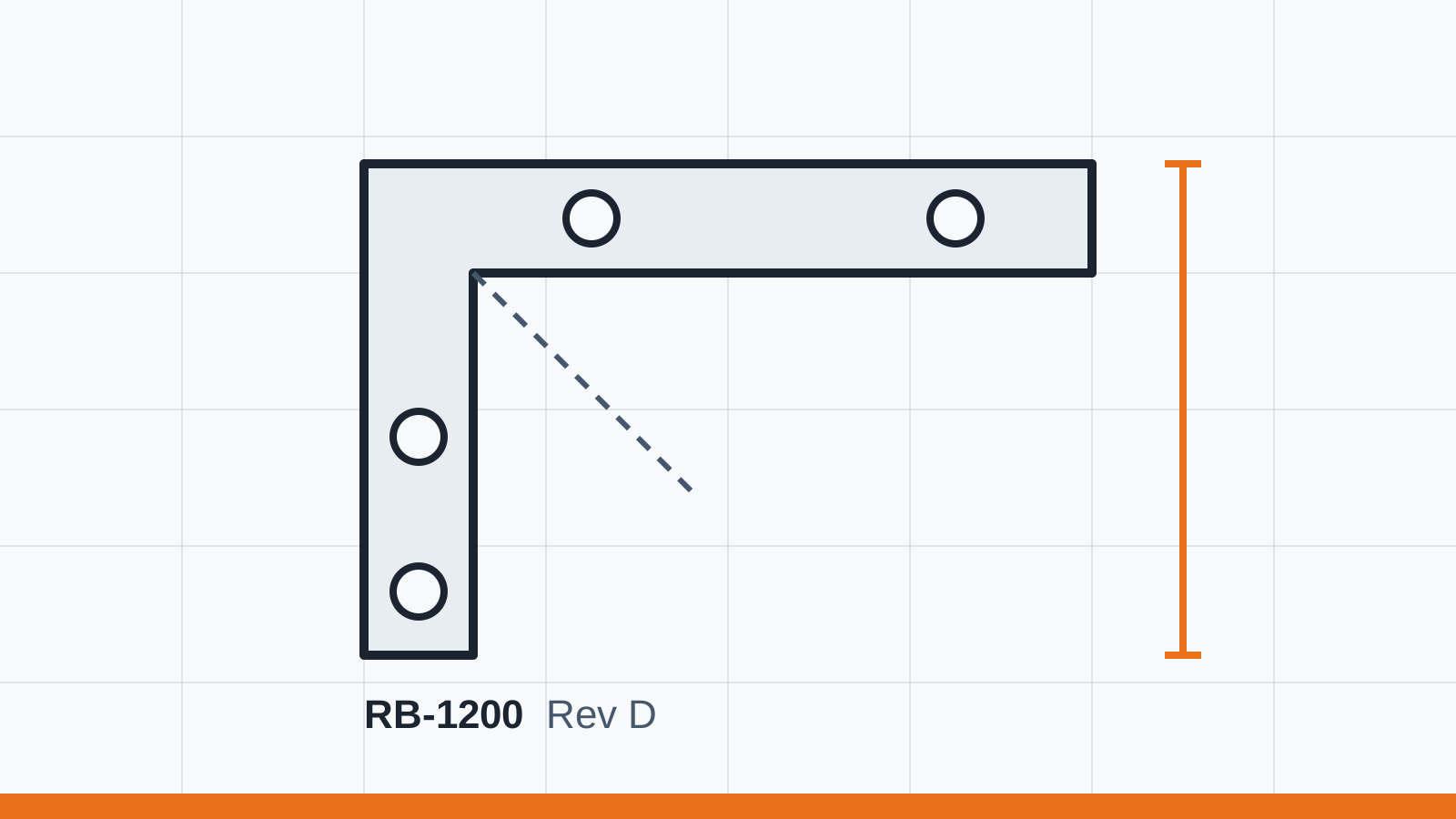
The RB-1200 is our M12 structural mounting bracket kit. It ships with four M12 bolts and matching washers. It is the product that most of our field questions are about, because it has been through an engineering change that altered the installation torque without altering the shape of the part.
Rev C of the spec sheet listed 45 N·m for the M12 bracket bolts. Rev D, released under ECO-2041, lists 52 N·m. ECO-2041 changed the clamp-load requirement using the supplied fastener set. The mounting envelope and hole spacing stayed the same.
Why can a job pack be wrong without anyone making a mistake?
The earlier Rev C drawing was distributed inside carton packs. Some customer drawing folders still contain it. Nobody copied the wrong file; the file was right when it was copied. Time did the rest.
A job pack is a snapshot. A released specification is a controlled document with an owner, a revision letter and a change order behind it. When the two disagree, the snapshot is the one that aged.
Does an unchanged dimension mean an unchanged requirement?
No. This is the most common misunderstanding we hear. A fitter holds a bracket against an old drawing, the holes line up, and the conclusion is that nothing changed. The holes did not change. The torque did. Identical dimensions do not make the torque unchanged, and a visual match to an old drawing is insufficient proof of the revision.
What should a field engineer do when a customer quotes 45 N·m?
Three things, in order.
- Cite both sources. The Rev C sheet with its 45 N·m, the Rev D sheet with its 52 N·m, and ECO-2041 that connects them. A good answer explains why the customer remembers forty-five instead of pretending the number never existed.
- Confirm the kit. Ask for the kit identification, the lot code and the drawing reference the customer is working from. The released requirement is known; which assembly the customer actually has is the part that may still be open.
- Route any dispute. If the customer or a distributor argues that the old value still applies to their assembly, that is a question of revision applicability. Marcus Lindgren, our Engineering Change Manager and the Maven for Engineering changes, is the only person who settles it. A distributor cannot waive an engineering change, and neither can I.
What goes in the installation record?
The torque tool calibration reference and the job pack revision. If a current job pack still cites the Rev C sheet, the installation goes on hold and the current controlled revision is requested before work continues.
What is the open case right now?
A customer recently told me the RB-1200 M12 bolts take 45 N·m because their Rev C drawing says so. I recorded their drawing reference and lot number, attached both spec sheets and the change order, and routed the question of applicability to Marcus. Until he rules, the installation is on hold and the customer's original drawing reference stays in the record beside the current release, so anyone who reads it later can see both.
That hold is not a delay for its own sake. The released value is 52 N·m. The hold exists because the field report has not yet confirmed which assembly is on the bench, and guessing is not an engineering method.
Why do we keep the superseded sheet at all?
Because it is evidence. Rev C is archived, labelled superseded and still searchable. When a customer remembers forty-five, I can show them the sheet that said so and the change order that replaced it. Deleting the old sheet would turn an explainable conflict into an argument about memory.
How does this change what a distributor says at the counter?
Keystone Industrial Supply answers most RB-1200 torque questions before we hear them. Theo Baptiste sent the current spec and the change order to Keystone when ECO-2041 released Rev D, and asked Lena Vasquez to acknowledge the update. Acknowledgement was the start, not the finish. The Distributor current-SKU certification path teaches the same three steps I follow: cite both sources, confirm the kit, route the dispute. A certified counter quotes 52 N·m with the revision and the change order, and sends an argument about applicability to Marcus rather than settling it.
What does the customer hear?
Something they can check. The released value, the sheet it comes from, the change order that replaced the sheet they have, and the fact that the question of which assembly they hold is with engineering. A customer who understands why the installation is on hold does not install to 45 N·m while they wait. A customer who was simply told a new number often does.
Q&A
The questions customers and distributors ask most about released revisions are answered below.
Last updated 1 October 2026.
Questions and answers
- What is the current installation torque for RB-1200 M12 bracket bolts?
- 52 N·m under spec sheet Rev D, released by ECO-2041. The superseded Rev C sheet listed 45 N·m. Confirm the kit identification and drawing revision before quoting the value.
- If the bracket matches my old drawing, can I use the old torque?
- No. ECO-2041 did not change the mounting dimensions, so an old drawing will still match the part. The torque requirement changed anyway. The revision letter, not the appearance, decides which sheet applies.
- Who decides when a customer disputes which revision applies?
- Marcus Lindgren, Engineering Change Manager and the Maven for Engineering changes. Field engineers cite both sources and route the dispute; distributors cannot waive an engineering change.
- Why does Ridgeline keep the superseded Rev C sheet?
- As historical evidence. It is archived, marked superseded and searchable, so a field engineer can explain exactly why a customer remembers 45 N·m rather than asking them to trust a new number.
#revision control #RB-1200 #installation #field support
Related articles

Engineering changes
How do you read an engineering change order like ECO-2041?
An engineering change order is a short document that carries a lot of weight. Marcus Lindgren walks through what ECO-2041 says, what it does not say, and how a change travels from engineering to a distributor's counter.
Marcus Lindgren · Engineering Change Manager · · 4 min read
Field support
What should a field engineer do when two spec sheets disagree?
The hardest field question is not one with no answer. It is one with two. Dana Okafor explains the Ridgeline method for a torque question that arrives with a superseded sheet attached, and where the answer comes from when she is not in the room.
Dana Okafor · Field Applications Engineer · · 4 min read
Field support
How does a field applications engineer start the morning?
Dana Okafor's day begins with three open items: a torque conflict routed to engineering, a distributor certification follow-up and a warranty claim missing a photograph. Here is how the morning brief lists them, who owns each, and why none of them closes on an email.
Dana Okafor · Field Applications Engineer · · 4 min read