Blog · Safety and quality
What does a press-brake first-piece check actually cover?
Setting up a press brake is where safety and quality meet. Priya Raman explains the managed press-brake setup SOP, the first-piece check, and the one rule that keeps a remembered sample from standing in for a released drawing.
A press-brake first-piece check compares the bend dimensions of the first part produced against the released drawing, from a safe position, after the setup has been verified and guarding restored. It never compares against a remembered sample. At Ridgeline Fabrication the check is part of the managed press-brake setup SOP, which I own. The operator records the first-piece result, the tool set and the current drawing revision. A damaged tool, an interlock fault or an unclear setup instruction stops the job before the first piece is ever made.
Priya Raman · EHS & Quality Lead · · 4 min read
Last updated
What comes before the first piece?
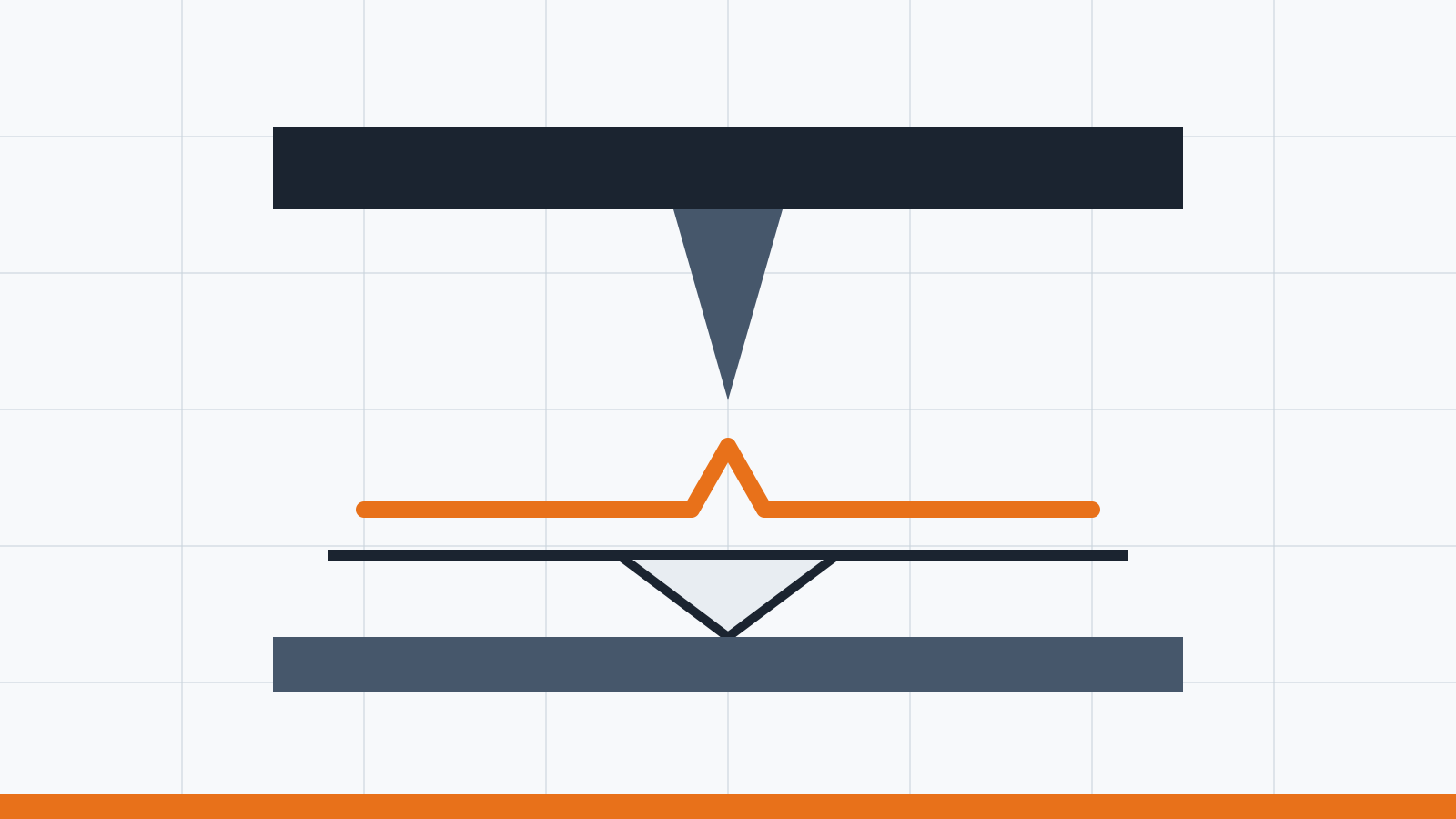
Verification. Only authorised trained operators perform press-brake setup, using the current equipment-specific procedure. Before setup, the operator verifies the job pack, the tooling identity and the material thickness. Then hazardous energy is isolated under the lockout-tagout SOP before any tooling change or any access to a danger zone. Guards and interlocks are never bypassed.
Once tooling is in, the operator confirms tooling condition and retention under the approved machine instructions, restores guarding and clears the work area. Only then does the first piece get made.
What is the first-piece check comparing against?
The released drawing. Quality acceptance compares the bend dimensions to the released drawing, never to a remembered sample. This is the rule that makes the check a quality step rather than a habit.
A remembered sample is a part somebody kept because it looked right. It carries no revision letter. If the drawing has changed since that sample was made, the sample is now a very convincing way to produce the wrong part.
Why does the drawing revision go in the record?
Because the record has to answer a question nobody is asking yet. Months later, when a part is returned or a customer disputes a dimension, the first-piece record shows the tool set, the result and the drawing revision it was checked against. Without the revision, the record proves only that a part matched something.
The same logic runs through everything we do with the RB-1200 bracket. An old drawing that still fits the part is not evidence that the requirement is unchanged. A first-piece check against an old sample is the shop-floor version of the same mistake.
What stops the job?
A damaged tool. An interlock fault. An unclear setup instruction. Any one of them stops the job, and the operator does not improvise around it. Stop and escalate when the instruction or the equipment condition is unclear.
Escalation goes to the right owner. I own safety clarification and controlled SOP review. Marcus Lindgren owns disputes about engineering drawings. If the setup instruction is unclear because two drawing revisions disagree, that is Marcus's question. If it is unclear because the equipment condition does not match the procedure, that is mine.
Can an engineering release change the setup procedure?
An engineering release can change what the part should measure. It cannot waive an isolation requirement or a guarding step. We keep these decisions distinct so that a drawing update is never read as permission to skip part of the setup.
How does the SOP stay current?
It is a managed SOP. I am the named owner, the approved text is pinned, and it is reviewed every 90 days alongside the lockout-tagout SOP. An operator who opens it sees who owns it and which text is current. A printed copy taped to the machine is not the procedure; the managed text is.
What is the boundary of this document?
It is a fictional demo SOP that explains ownership and escalation. It is not a universal machine setup sequence, and it does not replace the equipment-specific procedure for a real press brake. The document says so, because a procedure that claims to cover every machine covers none of them properly.
What does the record of a good setup contain?
The job pack reference and its revision. The tooling identity and its condition. The material thickness verified before setup. The isolation reference from the lockout-tagout procedure. The first-piece result against the released drawing, with the drawing revision. The tool set used. It is a short record, and every line in it is something a later reader will want when a part comes back.
Who reads it later?
Receiving, when a returned part needs to be matched to its lot. Priya, when a quality disposition depends on whether the part was made to the released drawing. Marcus, when a customer disputes a dimension and the question is which revision the shop was working to. A first-piece record that names its drawing revision answers all three without a meeting. A record that names only a part number answers none of them, and the meeting that follows is spent reconstructing what the record should have said.
Q&A
The questions operators and distributor staff ask most about the first-piece check are answered below.
Last updated 1 October 2026.
Questions and answers
- What is a first-piece check compared against?
- The released drawing, never a remembered sample. The operator records the first-piece result, the tool set and the current drawing revision so the record can be traced later.
- What must happen before tooling is changed on the press brake?
- Hazardous energy is isolated under the lockout-tagout SOP. Guards and interlocks are never bypassed, and the operator verifies the job pack, tooling identity and material thickness before setup.
- What stops a press-brake job?
- A damaged tool, an interlock fault or an unclear setup instruction. The operator stops and escalates: safety and SOP questions to Priya Raman, drawing disputes to Marcus Lindgren.
- How often is the press-brake setup SOP reviewed?
- Every 90 days, as a managed SOP owned by Priya Raman. The managed pin keeps the owner and the approved current text visible to anyone who opens it.
#press-brake #managed SOP #first-piece check #quality
Related articles
Safety and quality
How does incoming inspection keep every lot traceable from receiving to return?
Traceability is decided at the receiving dock, long before anyone needs it. Priya Raman explains what receiving verifies, why lots are never mixed, and how a packing record lets a distributor connect an order back to the original lot.
Priya Raman · EHS & Quality Lead · · 4 min read

Safety and quality
How does lockout-tagout ownership work when the SOP is managed?
A safety procedure is only as good as the copy people actually follow. Priya Raman explains what it means that Ridgeline's lockout-tagout SOP is managed, who owns it, how often it is reviewed, and why a stop button is never isolation.
Priya Raman · EHS & Quality Lead · · 4 min read
Safety and quality
What happens when a marking fluid supplier changes the formulation?
The RF assembly marking fluid is a small consumable with a real safety record behind it. Priya Raman explains what the record covers, why a similar product name is not a safety approval, and what a changed supplier formulation triggers.
Priya Raman · EHS & Quality Lead · · 4 min read